
Physician providing personalized women’s healthcare at Internal Healing & Wellness MD in The Woodlands, TX

Develop Skincare Products for Commercial-Scale Production

Commercial skincare development requires alignment between the formula, intended benefits, sensory profile, packaging, and production requirements. Established beauty brands need a skincare manufacturer that can translate these priorities into scalable products.

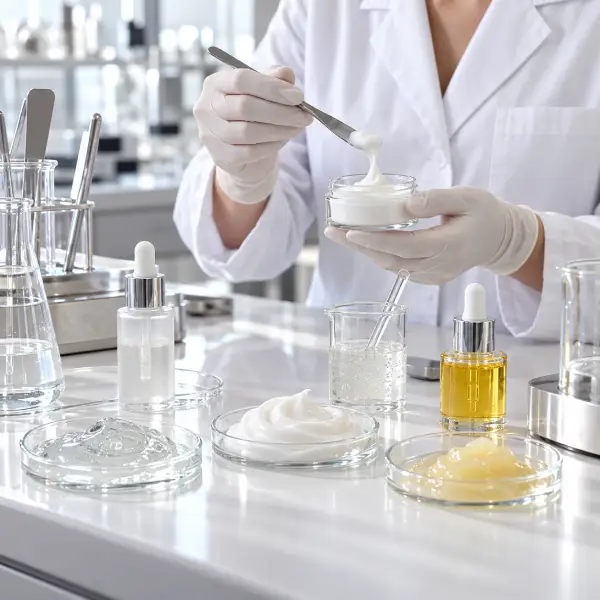
Bayport Laboratories develops and manufactures skincare in liquid, cream, gel, serum, oil, balm, powder, and emulsion formats. Our capabilities include custom formulation, formula customization, scale-up, manufacturing, filling, and packaging coordination.
Full-Service Skincare Manufacturing

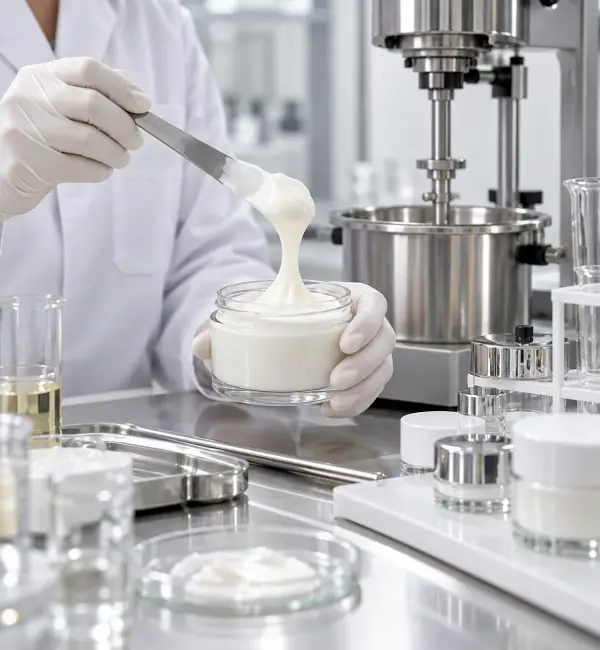
Our team supports individual launches, coordinated skincare systems, and extensions of established product lines. Each project is evaluated according to its formula, positioning, packaging, volume, and commercial requirements.

Our capabilities may include:

  • Custom and existing-formula development
  • Ingredient, texture, and sensory refinement
  • Prototype sampling
  • Packaging compatibility evaluation
  • Commercial scale-up
  • Filling and component assembly

Skincare Products We Manufacture

We manufacture skincare across multiple formats, textures, and packaging systems.

Facial Cleansers

Cleanser formats may include gels, creams, oils, balms, and powders. Development can address viscosity, lather, rinsing, after-feel, and packaging compatibility.

Moisturizers and Facial Creams

Moisturizers may include lightweight lotions, rich creams, gels, gel creams, and other emulsions. Key considerations include texture, absorption, spreadability, finish, and dispensing performance.

Facial Serums, Toners, and Mists

Capabilities may include water-based, oil-based, gel, emulsion, bi-phase, and sprayable products. Development considers solubility, viscosity, stability, spray or dispensing performance, and packaging.

Masks and Exfoliating Products

Masks may include cream, gel, clay, and powder formats. Exfoliating products can incorporate suitable physical or chemical approaches based on their intended cosmetic use and applicable requirements.

Facial Oils and Balms

Oil-based products and balms require evaluation of oxidation risk, ingredient compatibility, texture, melting behavior, application, and packaging.

Eye and Targeted Skincare Products

Eye creams, eye serums, spot products, and age-supporting skincare can be developed around defined texture, application, packaging, and cosmetic-positioning goals. Proposed claims should undergo appropriate substantiation and regulatory review.

Custom Skincare Formulation and R&D

Our R&D team defines the formula’s ingredient direction, texture, application, packaging, and positioning. Brands may pursue custom development, customize an established formula, or transfer a client-owned formula.

Custom Formulation

Custom development supports brands seeking a distinct formula, ingredient strategy, texture, or product format. Prototypes are refined through structured feedback before commercial scale-up.

Existing Formula Customization

An established formula may provide a more efficient starting point. Depending on feasibility, it can be adapted through changes to ingredients, fragrance, viscosity, texture, color, finish, or packaging.

Formula Transfer

A client-owned formula may be considered after reviewing ownership, processing instructions, specifications, testing records, packaging, and production requirements. Additional development or testing may be required before manufacturing.

Physician providing personalized women’s healthcare at Internal Healing & Wellness MD in The Woodlands, TX

Ingredient, Texture, and Sensory Development

Ingredients must function within the complete formula and remain appropriate for the product’s intended use, packaging, and positioning. Development should evaluate:

  • Ingredient compatibility and solubility
  • Formula pH and emulsion structure
  • Preservation and microbiological risk
  • Oxidation sensitivity
  • Viscosity, absorption, and after-feel
  • Finish, fragrance, and color
  • Packaging interactions
  • Intended claims and regulatory requirements

Individual ingredients do not independently prove finished-product performance. Claims and sensory goals must remain compatible with the complete formula, supporting evidence, packaging, stability, and manufacturing requirements.
Skincare Filling and Packaging Support

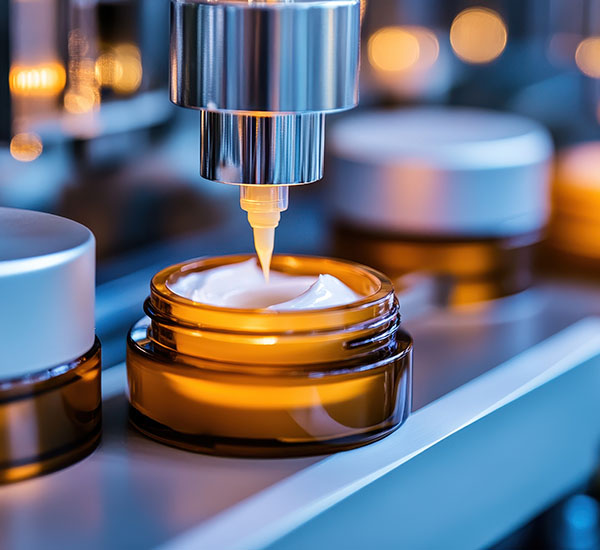
The formula and component should be evaluated as one system because packaging can affect protection, dispensing, stability, and consumer use.

Depending on the project, component options may include:

  • Bottles, jars, and tubes
  • Pumps, treatment pumps, and airless containers
  • Droppers and spray components
  • Pots and balm containers
  • Approved single-use formats

Evaluation may address viscosity, component materials, dispensing performance, product exposure, sealing, filling, and storage conditions. Packaging should be selected early enough to identify compatibility or production concerns before manufacturing.

Scalable Skincare Manufacturing in Houston, Texas

Our Houston facility supports liquid, cream, gel, serum, oil, balm, powder, and emulsion-based skincare products. Specialized and automated equipment accommodates different processing, batch, filling, and packaging requirements.

During scale-up, the production team evaluates how the approved formula, specifications, equipment, processing conditions, and packaging perform under commercial conditions. Documented procedures, in-process checks, traceability, and finished-product review help maintain consistency.

From Skincare Concept to Finished Production

Our process integrates formulation, packaging, testing, scale-up, filling, and commercial manufacturing.

Project Discovery

Review the concept, format, ingredient direction, texture, packaging, volume, and launch requirements.

Formula Development

Create, customize, or evaluate the formula according to the approved brief.

Sampling and Refinement

Review prototypes and apply structured feedback.

Testing and Packaging Evaluation

Assess specifications, testing requirements, component compatibility, and filling needs.

Scale-Up and Manufacturing

Transfer the approved formula into commercial production using defined procedures.

Filling and Review

Fill the product into approved components and evaluate it against established requirements.

Physician providing personalized women’s healthcare at Internal Healing & Wellness MD in The Woodlands, TX

Why Established Skincare Brands Work With Us

Our team brings together the technical capabilities needed to move skincare formulas into commercial manufacturing.

Key advantages include:

  • Liquid, cream, gel, serum, oil, balm, powder, and emulsion capabilities
  • Custom formulation and existing-formula customization
  • Ingredient, texture, and sensory development
  • Packaging and filling evaluation
  • Commercial scale-up and production support

Frequently Asked Questions

Can a skincare product be reformulated when an ingredient is discontinued?

Reformulation may be possible after evaluating the ingredient’s purpose within the formula and identifying technically suitable alternatives. A replacement can affect texture, appearance, stability, processing, packaging compatibility, and product claims. Additional development and testing may therefore be required.

Why can the same skincare formula feel different in a larger production batch?

Equipment, mixing conditions, heating and cooling rates, ingredient-addition order, processing time, and batch size can influence viscosity, texture, appearance, and application. A structured scale-up process helps establish appropriate procedures for commercial manufacturing.

Can the same skincare formula be sold in multiple markets?

Possibly, but ingredient restrictions, labeling, safety documentation, product notification, and claim requirements vary by jurisdiction. The formula, packaging, claims, and supporting documentation should be reviewed for each intended market before launch.

Who owns a custom skincare formula?

Formula ownership depends on the development agreement. Before work begins, brands should define rights to the quantitative formula, manufacturing procedures, specifications, testing data, modifications, and transfer documentation.

Can a fragrance-free skincare product contain ingredients with a natural odor?

Yes. “Fragrance-free” generally indicates that fragrance has not been added to create a scent, but individual raw materials may still contribute their own odor. The formula, terminology, and proposed claims should be reviewed for the intended market.

What happens if a skincare formula fails stability or compatibility testing?

The development team should investigate whether the formula, manufacturing process, packaging, or test conditions contributed to the result. The product may require reformulation, processing changes, different packaging, revised specifications, and additional testing before commercialization.

Prepare Your Skincare Formula for Commercial Production

Bayport helps established beauty brands prepare skincare formulas, packaging systems, and production requirements for commercial manufacturing. Contact our team to discuss your product format, formulation direction, anticipated volume, packaging plans, and launch objectives.