
What Makes Plant Extracts Effective in Skincare Formulations
Plant extracts in skincare can support hydration, antioxidant protection, visible redness reduction, skin tone, and sensory appeal. However, a recognizable botanical name does not guarantee performance. Plant species, growing conditions, extraction methods, concentration, standardization, stability, packaging, and interactions with other ingredients all affect the finished formula.
Bayport Laboratories supports emerging and established beauty brands through custom skincare formulation and manufacturing, ingredient sourcing, testing coordination, packaging support, filling, and commercial-scale production.
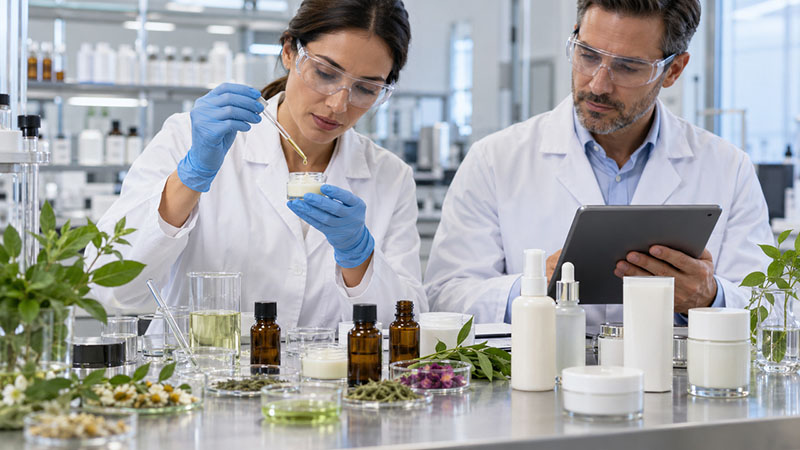
What Are Plant Extracts in Skincare?
Plant extracts are materials obtained from leaves, flowers, roots, fruits, seeds, bark, or other botanical sources. Water, alcohols, glycols, oils, carbon dioxide, and other extraction systems capture different groups of compounds.
Botanical extracts may contain:
- Polyphenols and flavonoids
- Polysaccharides
- Terpenes and essential oils
- Vitamins and minerals
- Fatty acids and botanical oils
- Pigments, enzymes, and aromatic compounds
These molecules may show antioxidant, anti-inflammatory, moisturizing, soothing, antimicrobial, or pigmentation-related activity. The evidence can come from laboratory, animal, ingredient-level human, or finished-product studies, and those forms of evidence are not interchangeable.
Research shows that plant-derived compounds are increasingly being studied for their potential skin-health applications. For skincare manufacturing, the central question is whether the selected extract can deliver safe, stable, and relevant performance in the intended formula.
How Botanicals May Support Skin Health
Botanical extracts can support different skincare goals depending on their chemical composition, concentration, delivery system, and role within the finished formula. Common applications include antioxidant protection, soothing, hydration, and visible tone improvement.
Antioxidant and Visible-Aging Support
Many plant extracts contain polyphenols and flavonoids that may:
- Neutralize free radicals in experimental systems
- Support the skin’s antioxidant defenses
- Help address environmental stressors such as pollution and UV exposure
- Complement formulas targeting visible signs of aging
However, ingredient-level antioxidant activity does not prove that a finished product prevents skin aging, increases collagen production, or reduces wrinkles. These claims require evidence relevant to the extract, concentration, delivery system, and final formula.
Soothing and Visible Redness
Common botanicals for sensitive skin and soothing formulas include:
- Chamomile
- Green tea
- Aloe vera
- Calendula
- Cucumber
- Licorice
- Centella asiatica
Their reported anti-inflammatory properties may support cosmetic claims to soothe irritation or reduce the appearance of redness.
Avoid unqualified therapeutic language. For example, “helps calm visible redness” is generally more appropriate for a cosmetic than “treats inflammation.”
Hydration and Skin-Barrier Support
Aloe vera, cucumber, botanical oils, and other plant-derived ingredients may provide:
- Polysaccharides and sugars
- Fatty acids
- Emollient properties
- Moisturizing or moisture-retention support
These ingredients can complement humectants, emollients, and occlusives in hydrating formulations.
However, a botanical extract does not automatically repair a compromised skin barrier or prevent moisture loss at every concentration. Hydration and barrier claims should be evaluated in the finished formula.
Skin Tone and Blemish Applications
Botanicals researched for pigmentation, sebum, inflammation, or blemish-related concerns include:
- Licorice
- Green tea
- Turmeric
- Tea tree
- Neem
Depending on the ingredient and formulation, these botanicals may support products targeting:
- Dark spots
- Hyperpigmentation
- Uneven skin tone
- Visible redness
- Oily or blemish-prone skin
Some botanicals demonstrate antimicrobial activity in experimental studies. However, this does not mean they can preserve a cosmetic formula or automatically kill acne-associated bacteria at cosmetic-use levels.
Key Plant Extracts and Their Formulation Roles
Each botanical offers different benefits, active compounds, and formulation challenges. Selection should reflect the product goal, extract specification, concentration, delivery system, and available evidence.
Aloe Vera
Aloe vera, commonly listed as Aloe barbadensis leaf juice, is used in gels, face washes, masks, creams, and after-sun products.
- Common roles: Hydration, soothing, and lightweight sensory benefits
- Key compounds: Polysaccharides, sugars, amino acids, minerals, vitamins, and enzymes
- Evidence: A systematic review found potential benefits in certain wound applications, but this evidence should not be applied directly to cosmetic claims.
Formulation watchout: Chemical complexity does not guarantee finished-product performance. Aloe vera should not be claimed to block UV rays or replace a properly tested sunscreen.
Green Tea Extract
Green tea extract from Camellia sinensis contains antioxidant polyphenols, including epigallocatechin gallate, or EGCG.
- Common roles: Antioxidant support, visible-redness care, and products for oily or blemish-prone skin
- Evidence: Green tea polyphenols have been studied for their potential effects on sebum and acne.
- Technical consideration: Catechins can degrade when exposed to oxygen, light, heat, or unsuitable pH conditions.
Formulation watchout: Laboratory results do not prove that every green tea cosmetic kills acne-causing bacteria, increases collagen, or produces clinical results.
Chamomile
Chamomile contains flavonoids and volatile compounds, including apigenin and bisabolol, associated with antioxidant and soothing activity.
- Common roles: Soothing products for sensitive, irritated, or visibly red skin
- Evidence: Research summarizes chamomile’s traditional uses, chemical constituents, and potential skin applications.
- Claim consideration: Specific soothing claims are more supportable than vague statements about “purifying” the skin.
Formulation watchout: Chamomile is not automatically non-irritating. Essential oils and botanical allergens require review, particularly in sensitive-skin products.
Centella Asiatica
Centella asiatica, also known as gotu kola, contains triterpenoids such as asiaticoside and madecassoside.
- Common roles: Visible-redness care, skin-barrier support, and visible-aging products
- Evidence: Research discusses Centella’s potential involvement in collagen synthesis, wound processes, and cosmetic applications.
Formulation watchout: Findings from cells, isolated compounds, or therapeutic settings do not prove that every Centella cream increases collagen or repairs the skin barrier.
Licorice Root
Licorice extracts may contain glabridin, liquiritin, or licochalcone A, depending on the plant species and extraction method.
- Common roles: Uneven skin tone, dark spots, visible redness, and antioxidant support
- Evidence: Glabridin has demonstrated activity involving tyrosinase-related pigmentation mechanisms.
Formulation watchout: Licorice extracts are not interchangeable. Brands should confirm the species, extraction method, standardized compounds, and recommended use level.
Cucumber, Calendula, Turmeric, and Rosehip
These botanicals can support hydration, soothing, antioxidant, and skin-tone formulations, but each presents different evidence and technical considerations.
- Cucumber extract: Used in refreshing, hydrating, and soothing products. Research describes its phytochemical profile and reported antioxidant properties.
- Calendula officinalis: Common in creams and balms for dry or sensitive skin. Its source, solvent, concentration, and allergen profile should be evaluated.
- Turmeric extract: Contains curcumin and related compounds studied for antioxidant, inflammatory, microbial, and pigmentation pathways. A systematic review found promising but still limited evidence for skin applications. Color, odor, solubility, and staining can create formulation challenges.
- Rosehip extract and oil: Used in products for moisture, visible aging, and uneven skin tone. Research discusses potential collagen and skin-regeneration mechanisms. Rosehip oil, seed oil, and fruit extract should not be treated as interchangeable ingredients.
Ultimately, the right botanical should be selected based on the formula’s intended benefits, supporting evidence, compatibility, stability, and safety requirements.
Why Extraction Methods Matter
The plant name identifies only part of the ingredient. Extraction determines which molecules are captured, their concentration, and how the material behaves in a formula.
Common extraction methods include:
- Water extraction for water-soluble compounds
- Hydroalcoholic extraction for a broader phytochemical range
- Glycol or glycerin extraction for cosmetic-ready liquids
- Oil infusion for lipophilic compounds
- Supercritical carbon dioxide extraction for selected nonpolar compounds
- Distillation for essential oils
Time, temperature, solvent, plant part, particle size, purification, and drying can change the final extract. Two suppliers offering green tea or licorice extract may provide materially different ingredients.
Review the botanical identity, plant part, solvent, carrier, standardized markers, preservatives, residual solvents, color, odor, solubility, microbial limits, contaminants, origin, and traceability.
Formulation and Concentration Determine Effectiveness
Formulation and concentration are critical to a plant extract’s effectiveness. A compelling ingredient story can fail if the extract is unstable, insoluble, incompatible, poorly delivered, or used below a meaningful concentration.
Standardization and Processing
Supplier documents should identify marker compounds, carrier, preservatives, recommended use level, processing limits, storage conditions, and supporting studies. Heat, oxygen, UV light, metal ions, and pH can degrade botanical compounds.
Sensory and Stability Effects
Natural extracts may add fragrance or color, but they can also cause odor, sediment, staining, oxidation, or batch variation. These issues matter in clear serums, pale creams, and fragrance-free products.
Preservation and Microbial Risk
Botanicals with antimicrobial properties should not be assumed to preserve a cosmetic. Water-based extracts may introduce nutrients, moisture, or microbial burden. Finished formulas still require an appropriate preservation strategy and microbiological evaluation.
Build Claims From the Evidence
Traditional use, laboratory research, animal studies, supplier testing, ingredient-level clinical studies, and finished-product trials provide different levels of support.
Before approving a claim, ask:
- Was the same species, plant part, and extract tested?
- Does the study concentration match the formula?
- Was the outcome measured in cells, animals, or humans?
- Was the ingredient tested alone or in a multi-ingredient formula?
- Does the wording describe a cosmetic benefit or treatment?
- Has the finished product been tested under intended use conditions?
Terms such as wound healing, treatment, anti-inflammatory, antimicrobial, and collagen production may imply therapeutic or physiological effects. Claims should be reviewed for the target market.
Test the Finished Botanical Formula
Botanical products should be tested as complete formulas. The plan may include:
- Accelerated and real-time stability testing
- pH, viscosity, color, odor, and appearance monitoring
- Microbiological limits and challenge testing when appropriate
- Packaging compatibility and functional testing
- Temperature cycling when justified
- Hydration, antioxidant, instrumental, consumer, or clinical testing
- Safety substantiation and irritation assessment
Plant extracts can darken, precipitate, oxidize, lose aroma, or interact with packaging. Testing helps determine whether quality and performance remain acceptable throughout the proposed shelf life.
Botanical Extract Selection Checklist
Before approving an extract, confirm:
- Botanical identity and plant part
- Extraction method and carrier
- Standardized compounds and lot specifications
- Evidence at a relevant concentration
- Processing and storage limits
- Controls for allergens, pesticides, contaminants, and residual solvents
- Color, odor, solubility, and batch consistency
- Stability and packaging considerations
- Claims supported by the evidence
- Reliable sourcing at commercial scale
Reviewing cosmetic manufacturing capabilities can help confirm that the botanical formula can be compounded, filled, tested, and scaled with appropriate equipment and controls.
Frequently Asked Questions
Not automatically. Botanical and synthetic ingredients can both be safe and effective. Selection should depend on identity, purity, concentration, evidence, stability, and finished-formula performance.
Yes, but natural does not mean non-irritating. Essential oils, fragrances, and plant allergens may irritate sensitive skin. Formula-level safety evaluation remains essential.
Generally, no. Ingredient-level antimicrobial activity may not provide broad, durable protection in a finished cosmetic. Water-based products need an appropriately designed and tested preservation system.
Use qualified suppliers, verified identity, controlled extraction methods, marker-compound specifications, Certificates of Analysis, incoming testing, and change control. Color and odor standards may also be needed.
No. Botanical antioxidants may complement a sun-care strategy but do not replace a properly formulated and tested sunscreen. Avoid SPF or UV-blocking claims without product-specific testing and regulatory support.
Build Botanical Products Around Evidence
Plant extracts can bring credible benefits, distinctive sensory qualities, and differentiated stories to skincare. Their value depends on selecting the right material, understanding its extraction, protecting unstable compounds, using a justified concentration, and testing the finished formula.
Bayport Laboratories supports emerging and established beauty brands through botanical formulation development, sourcing, testing coordination, packaging support, filling, and commercial-scale manufacturing.
References
Di Lorenzo, R., et al. (2023). Clinical Studies on Topical Curcumin. https://pubmed.ncbi.nlm.nih.gov/38008088/
Katiyar, S. K. (2017). Green Tea and Other Tea Polyphenols: Effects on Sebum Production and Acne Vulgaris. https://pmc.ncbi.nlm.nih.gov/articles/PMC5384166/
Michalak, M., et al. (2023). Plant Extracts as Skin Care and Therapeutic Agents. https://pubmed.ncbi.nlm.nih.gov/37895122/
National Center for Biotechnology Information. (2013). Centella asiatica in cosmetology. https://pmc.ncbi.nlm.nih.gov/articles/PMC3834700/
National Center for Biotechnology Information. (2018). The Effect of Aloe Vera Clinical Trials on Prevention and Healing of Skin Wound: A Systematic Review. https://pmc.ncbi.nlm.nih.gov/articles/PMC6330525/
National Center for Biotechnology Information. (2022). Chamomile: A Review of Its Traditional Uses, Chemical Constituents, Pharmacological Activities and Quality Control Studies. https://pmc.ncbi.nlm.nih.gov/articles/PMC9822300/
National Center for Biotechnology Information. (2024). Unveiling the Mechanisms for the Development of Rosehip-Based Dermatological Products: An Updated Review. https://pmc.ncbi.nlm.nih.gov/articles/PMC11043540/
PubMed. (2012). Phytochemical and Therapeutic Potential of Cucumber. https://pubmed.ncbi.nlm.nih.gov/23098877/
PubMed. (2016). Effects of Turmeric (Curcuma longa) on Skin Health: A Systematic Review of the Clinical Evidence. https://pubmed.ncbi.nlm.nih.gov/27213821/
PubMed. (2016). Inhibitory Mechanisms of Glabridin on Tyrosinase. https://pubmed.ncbi.nlm.nih.gov/27288962/